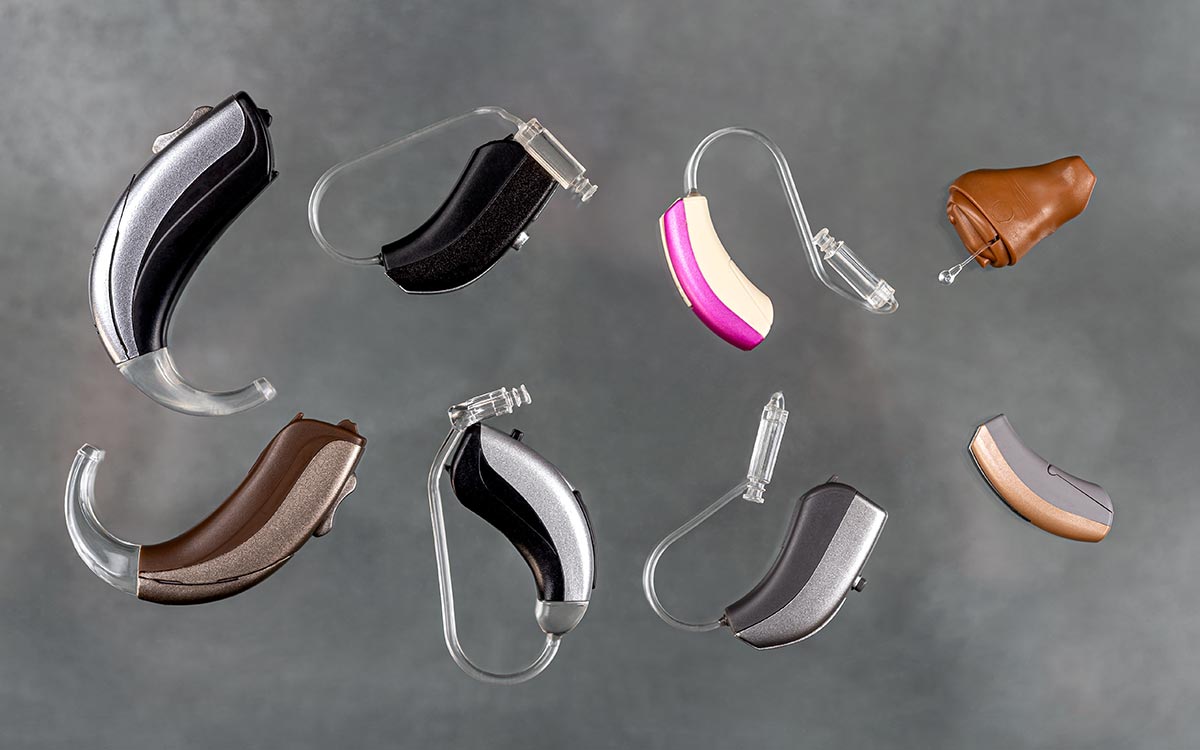
Choosing a hearing aid can feel daunting, especially when today’s devices come in so many styles, sizes, and technology levels. But no matter your needs, there’s an auditory solution for every lifestyle, preference, and degree of hearing loss or tinnitus. The key is merely identifying the one that fits you best.
Understanding the distinctions among the most common types of hearing aids can help you feel more informed and confident as you explore your options. Today, we’re summarizing the different hearing aid styles and what makes each one unique.
The ITC (In-the-Canal) Style Detailed
Basic Summary:
These hearing aids are placed partially inside the canal, making them visible only slightly from the outside.
Common Advantages:
- More subtle than larger models
- Specifically contoured to the wearer’s ear for an optimal fit
- Designed to address low to mid-range hearing impairments
First-time wearers frequently gravitate toward ITC aids because they strike an ideal compromise between size and performance.
Exploring IIC (Invisible-in-Canal) Options
Core Characteristics:
IIC hearing aids are the smallest custom design available. These devices sit so deeply inside the ear that they are nearly impossible to see.
Why people choose them:
- Highest degree of discretion for the wearer
- Provides authentic sound because of where the device sits
- Lightweight and easy
The small form size of IIC models renders them perfect for mild hearing loss and anyone who values a stealthy hearing solution.
In-the-Ear (ITE) Hearing Aids
Product Details:
These models fill either the complete or bottom half of the outer ear bowl. They are custom-made to match the contours of your ear.
Value Offering:
- The increased surface area offers space for extra functionality and extended power
- Ideal for seniors who find smaller devices hard to manipulate
- Effective for a wide range of hearing impairments, ranging from mild to severe
Users often choose these models for their straightforward, single-piece construction that avoids any external wiring or tubing.
Behind-the-Ear (BTE) Hearing Aids
Technical Detail:
A BTE hearing aid is placed externally behind the ear for an optimal fit. Audio is sent via an ultra-fine tube or a personalized mold in the canal.
Key Advantages:
- Very versatile and durable
- Effective for almost every level of hearing impairment
- Provide space for advanced features and rechargeable batteries
If you require a robust hearing aid that is simple to operate and offers high-power output, the BTE style is ideal.
RIC (Receiver-in-Canal) Summary
Component Structure:
RIC hearing aids appear similar to BTE models, but the speaker (receiver) sits inside the ear canal rather than inside the device behind the ear.
Key Benefits:
- Very natural sound quality
- Users appreciate the slim profile and comfortable fit for all-day use
- A versatile choice that works for various degrees of auditory needs
The combination of design and high-end functionality renders RIC models an ideal choice in the modern market.
Extended-Wear Device Facts
Operational Info:
These devices are placed deep in the ear canal by an audiology professional and can stay in place for several weeks at a time.
Lifestyle Advantages:
- Perfect for wearers who want to avoid the routine of handling hearing aids daily
- Almost invisible
- Designed to be worn throughout everyday activities, including sleeping and exercising
Extended-wear devices are ideal for those who want an effortless approach.
Smart Hearing Aids with Wireless
Digital Features:
These are modern devices equipped with wireless technology to sync with your personal electronics and televisions.
Modern Perks:
- Send calls, music, and audio straight to the hearing aids
- Gives you the ability to fine-tune your volume and programs via an electronic app
- Provides the ultimate in ease for those who use smartphones regularly
This wireless technology is located in most modern behind-the-ear and in-the-canal models.
Understanding Middle-Ear Implant Systems
Procedure Information:
A surgical solution that works by shaking the tiny bones inside the ear to provide amplified audio.
Why implants are used:
- Choice for people who cannot use traditional hearing aids
- Solves the issue of canal discomfort caused by regular hearing aids
An exhaustive meeting with a specialist professional is necessary before considering an auditory implant.
Choosing the Right Style for You
There is no one single “ideal” hearing aid; rather, there is an optimal one for you, determined by your medical needs and personal comfort. An expert can provide the support needed to test out different styles and find the one that fits your life perfectly.
Begin your journey to better sound by setting up a hearing test now. It is the most significant step you can make toward an increasingly vibrant and confident life.
Sources:
https://www.mayoclinic.org/diseases-conditions/hearing-loss/in-depth/hearing-aids/art-
20044116
https://www.hearinglife.com/hearing-aids/types
https://www.nidcd.nih.gov/health/hearing-aids